
Selling on WhatsApp without a person glued to the phone
Most WhatsApp orders are lost in the gap between a question and a reply. Closing that gap is a systems problem, not a staffing one.
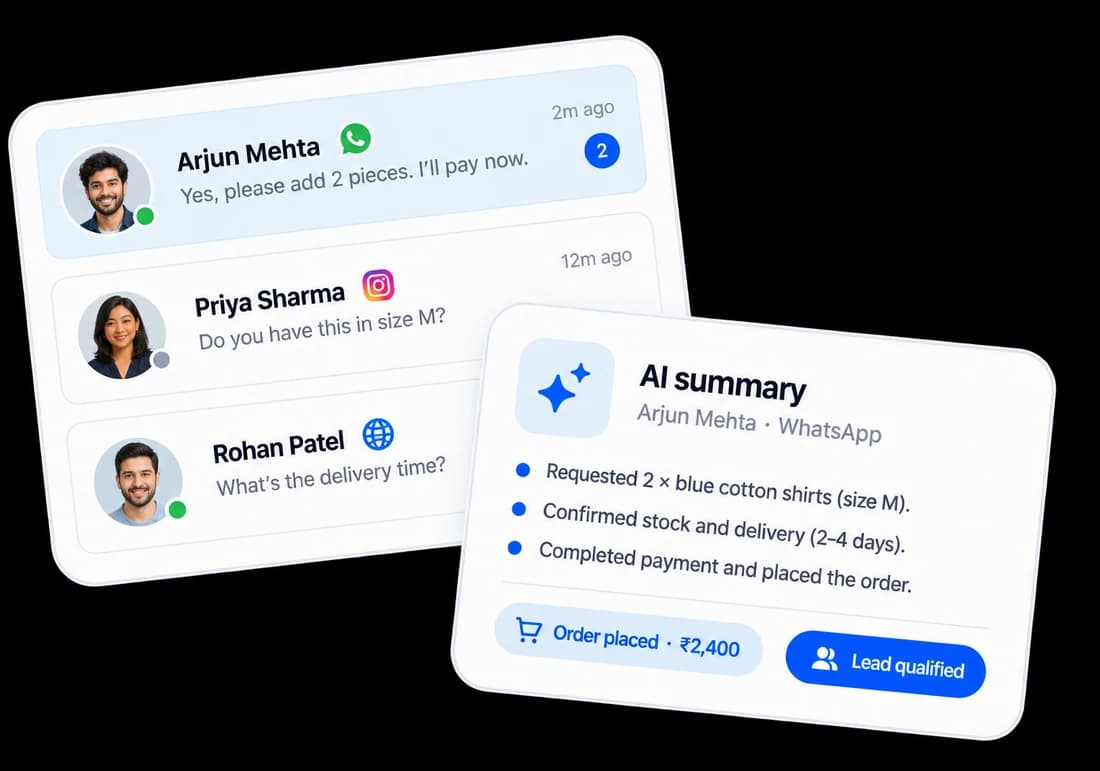
A customer messages at 11pm asking whether you have a blue cotton shirt in size M. You see it at 9am. By then they have bought it somewhere else. Nothing was wrong with your product, your price or your service. The only thing wrong was the ten hours.
The problem is the gap, not the volume
Most businesses selling on WhatsApp assume the fix is more people. It usually is not. The messages that decide a sale arrive in ones and twos, across the evening and the weekend. Each one needs about forty seconds of attention. That suits a shift rota badly. It suits something that is always on very well.
Look at what those forty seconds actually contain. Almost always it is the same few things. Is it in stock? What does it cost? When will it arrive? Can I have it? None of those are judgement calls. All of them are lookups against something you already maintain.
What a buyer needs before they will pay
A conversation that ends in an order tends to clear the same four checkpoints, in roughly this order:
Confirmation the item exists and is available right now, not last month.
A price they can trust, which means the price you actually set, not an estimate.
A delivery expectation specific enough to plan around.
A way to pay without leaving the conversation and hunting for a link.
The last one matters more than it looks. Every step that moves a buyer out of the thread is a step where they get distracted. When the payment link arrives with the answer, the decision and the purchase happen in one sitting.
Reading what they send, not just what they type
On WhatsApp people send photographs. They screenshot a product from your Instagram, or they photograph something they already own and ask for another one. A system that only understands typed product names stalls on the customers closest to buying.
Match that photo to a real item in your catalogue. Then the conversation carries on as if they had typed the name. It is a small thing that removes a very common dead end.
Where a person still belongs
None of this is an argument for removing people from the conversation. It is an argument for spending them well. A person is worth a great deal on a bulk enquiry or a complaint. The same goes for a customer about to spend a lot who wants to be treated like it. A person is worth very little on the fortieth stock check of the day.
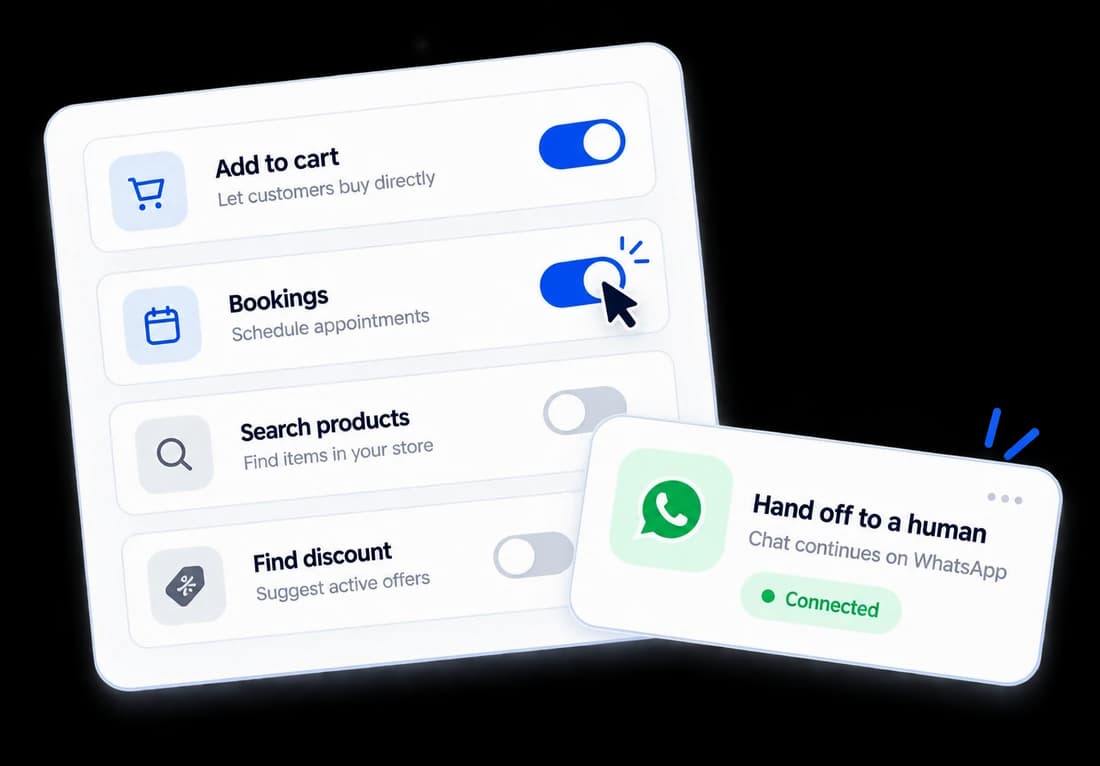
The goal is not an assistant that never hands over. It is an assistant that hands over on the conversations where a human changes the outcome.
What to set up first
If you are starting from nothing, the order that gets you results fastest is:
Connect the catalogue, so prices and stock are read rather than remembered.
Write down the five questions you answer every single day, and the answers.
Decide the one moment you always want a person pulled in.
Turn on payment in the thread, so a yes can become an order immediately.
That is a short list on purpose. Every item on it removes a specific delay you can already name. Anything more elaborate can wait until you have seen a week of real conversations.


Stop losing leads tonight.
Add your website. Impel builds your AI team, and you approve it before it answers anyone.